Good Schools of India
Joy of Learning Weekly #69
Participate in our Reading Sessions, Retreats, Workshops and Residential Training Sessions
The Alliance’s mission is to nurture inclusive and impactful educational ecosystems that promote collaboration and lifelong learning. Community partners serve as resource providers, knowledge contributors, co-creators, and connectors, thereby enhancing the effectiveness, sustainability, and impact of the Alliance. Schools, organisations, CSR partners, and innovators are all welcome to join us.
Empower teachers. Ignite joy. Transform 10 million lives.
Learning Forward Saturday
June 13, 3:00 pm, 45 min
The meeting focused on reflections and discussions about adolescent behaviour, particularly the chapter “Right vs. Wrong” and the upcoming chapter “Copy vs. Not to Copy.” Sneha Pundir shared her reflections on alienation, emphasising how punitive measures such as detention can exacerbate feelings of disconnection. Anurag Tripathi’s reflection highlighted the importance of empathy and trust in schools to prevent high-risk behaviours. The discussion also covered the impact of peer pressure and the need for healthy coping mechanisms. Roma’s story from the chapter illustrated the importance of honesty and effective learning techniques, such as associating information with personal milestones.
Who is Right?
I was reading the final chapter of The Courage to Be Happy by Ichiro Kishimi and Fumitake Koga, when my son, who was watching True Detective on Netflix, paused the show and said, “Listen to this dialogue. Rust Cohle, a character in the series, says, “I think human consciousness is a tragic misstep in evolution.”
He continued, “The problem with people is that they are too self-aware.”
We know we will die.
We worry about the future.
We regret the past.
We compare ourselves with others.
“That’s why human beings suffer.”
The world is simple. Life is too. Keeping it simple is difficult.
As we wrapped up The Courage to Be Happy in our Masterclass, I realised that the most meaningful learning often happens outside the pages of a book—in conversations, in questions, and sometimes in an unexpected dialogue between a mother reading a book and a son watching a serial. The book may have ended, but the reflection continues.
- Gurdeep Kaur, Co-host for the Masterclass with Sandeep Dutt
Building Trust-Based School Cultures to Prevent Adolescent Risk Behaviour
The ultimate antidote to such high-risk behaviours lies in building horizontal, trust-based relationships and cultivating a congenial, experiential learning environment where young minds feel valued, understood, and energised. By replacing harsh zero-tolerance policies with customised corrective interventions and open communication with parents, educators and families, educators can demystify forbidden temptations, reduce the influence of peer pressure, and guide students toward a genuine and safe joy of learning.
Anurag Tripathi, TGT English, Sunbeam School, Ballia
Sneha on how alienation can affect young people
I reflected a lot on how alienation can affect people, especially students and teenagers. I feel that when someone is punished through detention, suspension, or expulsion, it can sometimes make them feel even more disconnected rather than understood. I think alienation becomes harmful because when people stop feeling connected to others or even to themselves, they begin searching for ways to escape their emotions rather than understand them.
Sneha, intern at The English Book Depot
Books of The Week
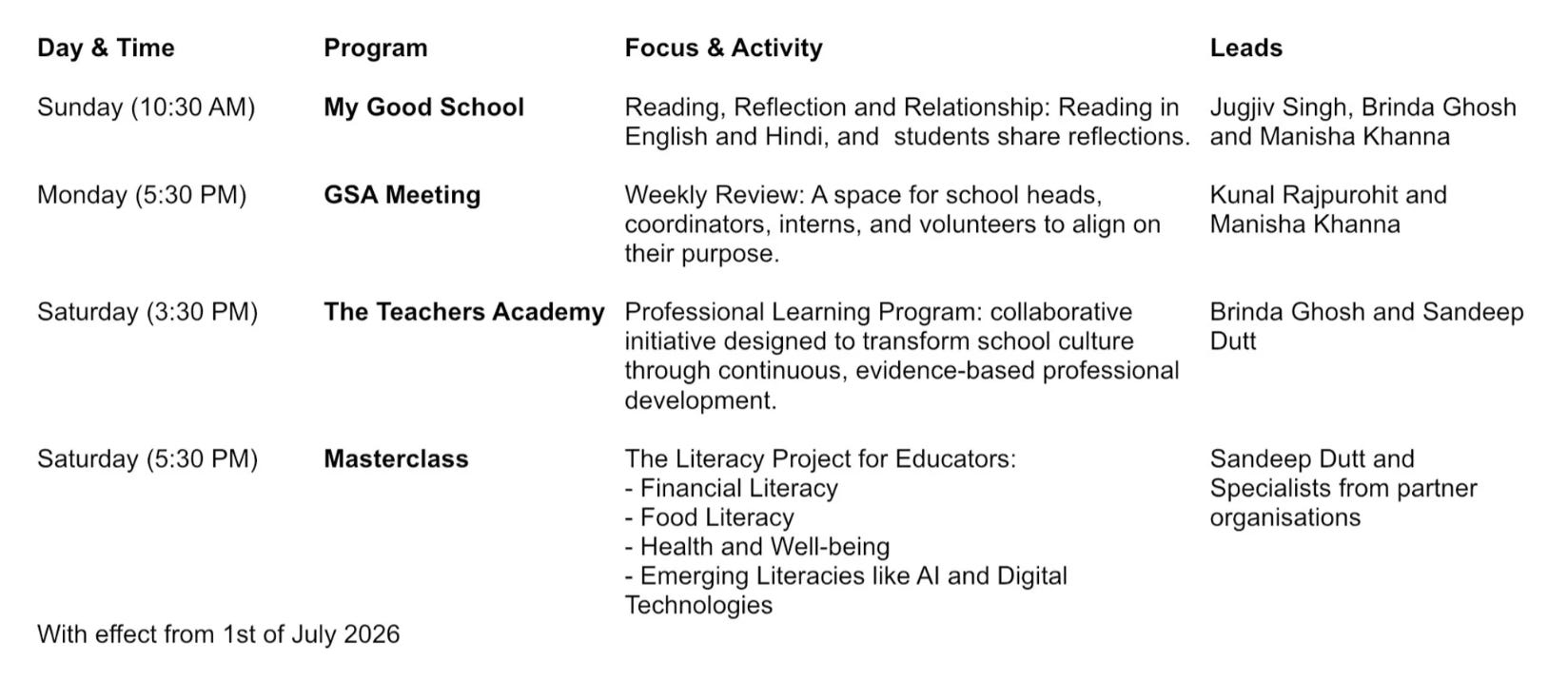
My Good School - Every Sunday
The Sunday School discussed the book “My Family and Other Animals” and “What You’re Looking For Is in the Library.” Participants shared their reflections on the books, emphasising the importance of goal-setting, self-assessment, and overcoming jealousy. They highlighted the significance of becoming one’s own best teacher through logical thinking and emotional understanding. The discussion also covered the challenges of career changes, the impact of external validation, and the importance of family support. The session concluded with a Hindi reading from “Time Stops at Shamli,” focusing on the role of teachers in shaping students’ lives.