Good Schools of India
Good Schools Alliance Weekly #64
Happy Teachers and the making of My Good School
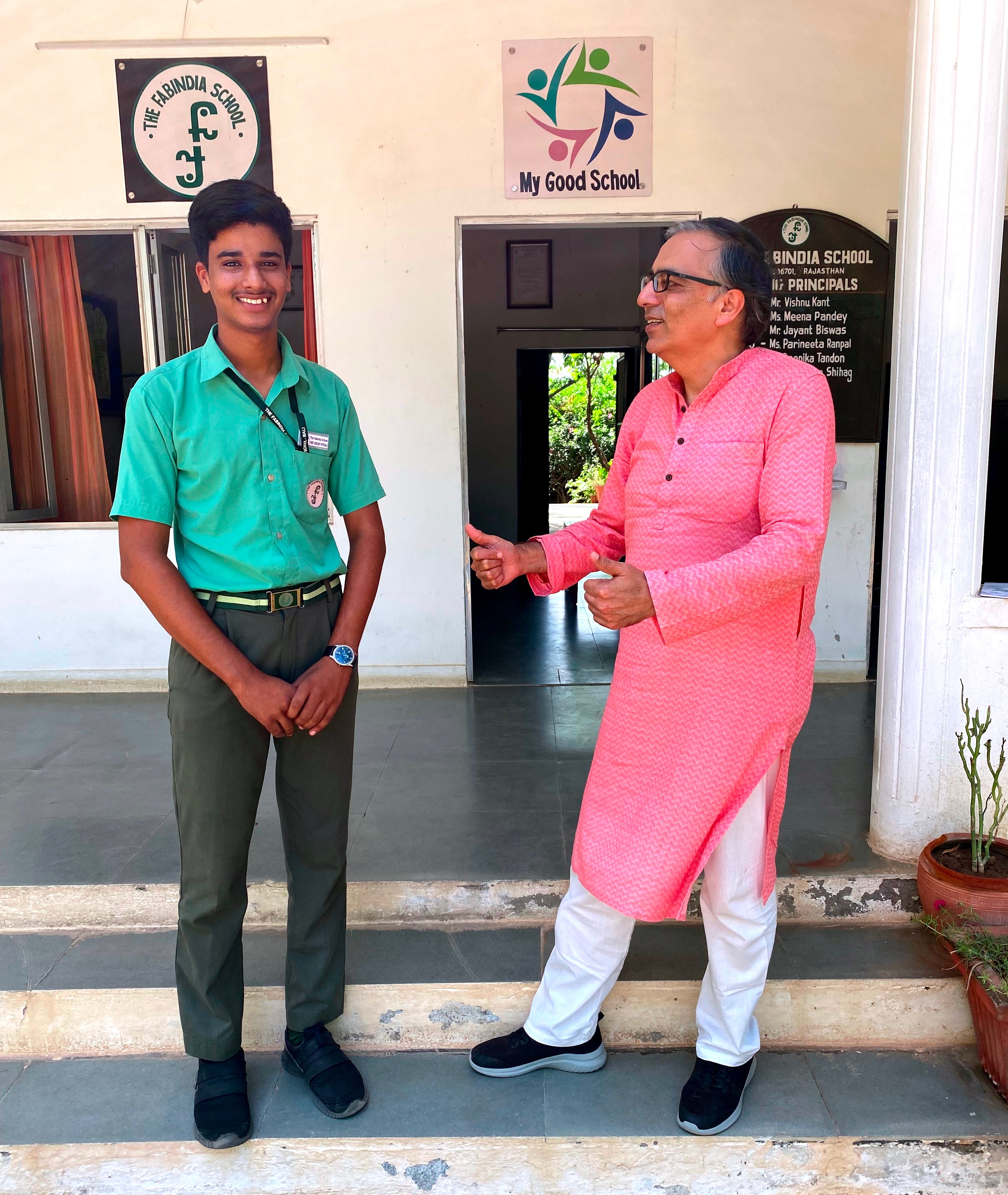
Kunal Rajpurohit, a student at The Fabindia School, is now the Projects Manager at the Learning Forward India Foundation. In the photo, you’ll find a heartwarming story of a teacher and a student at the same level, each taking a step forward together. It’s a beautiful tale of horizontal learning and building strong relationships.
The My Good School Program, which is the heart of The Fabindia School’s learning journey in Bali, Rajasthan, is a wonderful example of how schools can transform. When we focus on teacher development, amazing things happen! #HappyTeacher
From one My Good School to the Good Schools Alliance and now The Literacy Project for Educators, powered by the Learning Forward India Foundation, to equip teachers with essential life skills that extend beyond textbooks—helping them grow both professionally and personally.
Centred around the idea of “Happy Teachers,” the project emphasises empowering educators with practical knowledge in areas that affect daily life, including:
- Financial Literacy
- Food Literacy
- Emerging Literacies such as AI and more
Transform Life Chances For Every Child We Reach
When a school shifts, a child’s entire world shifts.
I’m Sandeep Dutt, and at the Good Schools Alliance, we’re now collaborating with over 50 schools that are eager to learn and grow together.
Through My Good School, we organise Sunday reading sessions and The Teachers Academy, helping schools weave reading, reflection and relationships into their weekly schedule. This means that every week, children get to read, share and reflect with their peers and teachers across the Alliance.
In just one year, 17 schools and 8 programme partners joined forces under the Alliance—ranging from reading and life-skills groups to wellbeing and teacher-development partners. This means that a single donor’s support is multiplied across dozens of campuses, hundreds of teachers and thousands of children each year.
Our member schools contribute an annual subscription, and philanthropic support enables us to subsidise programmes for our Special Projects that might not be able to afford this on their own—especially those with low fees and in rural areas. Your funding helps us expand retreats, reading programmes, and special projects in financial literacy, health and girls’ empowerment.
If you believe every child deserves a good school, please partner with us—either as a donor or a funding agency—so that together, we can take the Good Schools Alliance from dozens of schools to hundreds, and transform life chances for every child we reach.
My Village, My Problem. And I Am The Solution
Read and Lead
To read from Every Last Girl by Safeena Husain and discuss the Educate Girls campaign’s growth and strategy.
Key Takeaways
Volunteer Growth: Educate Girls’ volunteer force, “Team Balika,” grew from 140 in 2009 to over 1,000 in three years, defying scepticism from government officials and recruits.
Intrinsic Motivation: Volunteers are driven by personal stories of educational struggle, adopting the motto “My Village, My Problem. And I Am The Solution.”
Movement Building: The campaign built a powerful movement by connecting volunteers, providing training, and fostering a shared identity, which transformed individuals into local leaders.
Strategic Pivot: A “geographical lottery” of out-of-school girls prompted a strategic pivot to data-driven targeting, moving from “carpet bombing” to focusing resources on high-need “hotspots.”
We must think about the human love that is neither divine nor animal
Masterclass with Sandeep Dutt
Discussing Adlerian psychology and the nature of love from The Courage to be Happy.
Key Takeaways
Adler’s “Community Feeling” vs. Freud’s “Death Drive”: Adler’s psychology, formed while a WWI medical officer, proposes that conflict is prevented by seeing others as comrades—a direct counterpoint to Freud’s theory of an innate destructive impulse.
“Give, and It Shall Be Given”: True respect is earned by giving it first, not by demanding it. This “giving conduct” requires a spirit of abundance, not a “beggar of the spirit” mentality that waits to receive.
Love as a “Human” Task: Love is not a passive “falling into” but an active “building up” through will and effort. This “human love” is distinct from both “divine” (lofty, impractical) and “animal” (instinctual) forms.
Understanding the Teen Brain
Learning Forward Saturday
Discussing effective strategies for managing adolescent peer pressure and behaviour. Reading from the book Wanted Back-bencher and Last-ranker Teacher by Kavita Ghosh.
Key Takeaways
Redirect Peer Influence: The goal is to redirect peer influence toward positive outcomes, not to eliminate it. This leverages the group dynamic as a powerful tool for good.
Build Trust: A teacher’s trust is a more powerful motivator than punishment. Students will protect a trusted teacher from disappointment, creating a stronger foundation for discipline.
Understand the Teen Brain: Teenagers are hardwired for risk-taking. Their logical reasoning develops by age 15, but impulse control and resistance to peer pressure don’t mature until age 25.
Use “Gentle but Firm” Tactics: Effective discipline requires firmness without anger. Teacher Roma’s strategy of linking a class privilege (the football match) to the task of finding a hidden shoe successfully unified the group in resolving an issue.
The Light Way by Akane Hoshiba
We had the pleasure of Akane Hoshiba’s company at our Book Cafe, and she shared the book The Light Way and its core themes.
Book’s Core Message: The Light Way is a guide to one’s “soul path,” reminding readers they are inherently shining and complete from birth.
Inspiration: The book was inspired by two events: finding a notebook of his final thoughts after her father’s death, which showed words live on, and seeing her newborn son’s inherent radiance.
Core Philosophy: True happiness comes from self-love, which eliminates the need to prove worth to others. Spirituality is the essential foundation for a fulfilling material life.
Author’s Goal: To use words to help people remember their inherent light and take a step forward on their unique life path.